INDEX / ΘΕΟΛΟΓΙΚΗ ΚΑΙ ΧΗΜΙΚΗ ΑΝΑΛΥΣΗ ΑΝΑΣΤΑΣΗΣ ΛΑΖΑΡΟΥ
Open PDF
Loading flipbook...
1 / 1
Ready
12,72 €
In stock
12,72 €
In stock
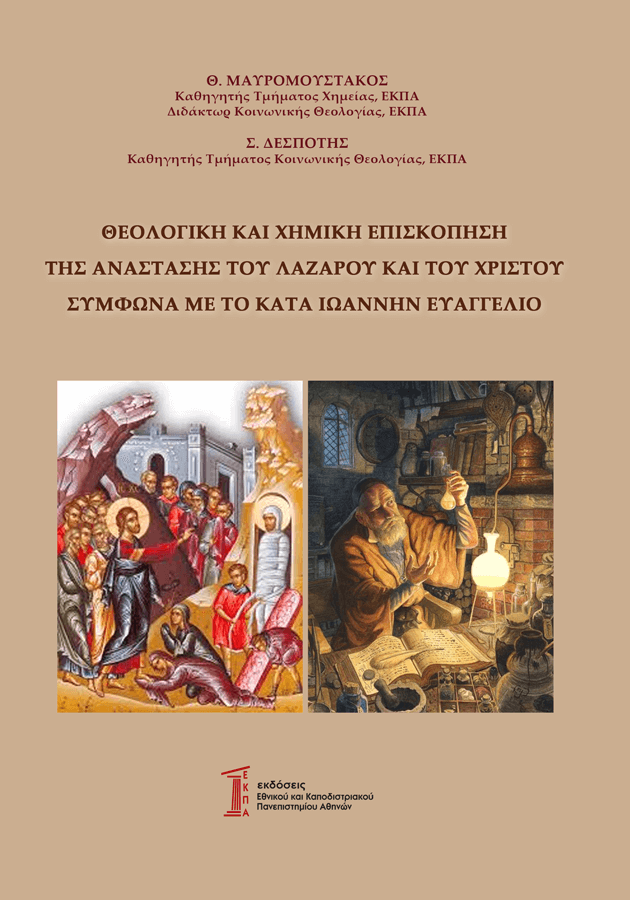
The New Testament texts contain information that can inspire study not only by theologians but also by chemists. Such texts are those written by the Evangelist John and refer to the Resurrections of Lazarus and Christ. Assuming that the information provided in the Gospel of John is historical and accurate, conclusions were documented concerning the Resurrections of Lazarus and Christ. For example, it was documented that the dead body of Lazarus could emit an odor due to the toxic and foul-smelling substances released from its decomposition. It was also documented that the body of Christ was resurrected because the wrapped linens could not exist alone. The exceptional physicochemical attractive forces developed by the burial linen, the hundred liters of myrrh and aloe mixture, and the dead body of Christ did not allow for the theft of only the dead body. Significant effort was made to explain the physical and possibly symbolic meaning of the numbers involved in the Gospel texts under study from the Gospel of John. The conclusion drawn is that these numbers were not placed randomly in the texts but serve as markers of significant theological messages. The quantity expressed by these numbers is indeed crucial in deriving chemical conclusions.
Thomas Mavromoustakos
was born in Prasteio Morphou, Cyprus in 1960. He completed his undergraduate studies at the National and Kapodistrian University of Athens (NKUA) in 1985 and his postgraduate, doctoral, and postdoctoral studies at the Department of Pharmacy at the University of Connecticut, USA in 1990. From 1991-2007, he served as a researcher at the National Research Foundation. In 2007, he was elected Associate Professor at the Laboratory of Organic Chemistry in the Department of Chemistry.
Sotirios Despotis
was born in Athens in 1968. He studied at the Department of Theology at the National and Kapodistrian University of Athens and completed his postgraduate studies in Mainz, Germany. Concurrent studies in Byzantine and European Music at the Skalkotas Conservatory – member and soloist of the Greek Byzantine Choir. Professor at NKUA with expertise in the Interpretation of the New Testament. He served as President of the Department of Social Theology and Religious Studies (2015-2020). Coordinator and lecturer at the Hellenic Open University in the module "The historical course of the Orthodox Church and theology in the broader religious and cultural environment (late antiquity – 18th century)". Member of the International and European Association of New Testament Scholars.
Tel. Call Center +30 210 3688 189
Operating Hours Mon-Fri: 10:00 - 17:00
Tel. Call Center +30 210 3688 189
Operating Hours Mon-Fri: 10:00 - 17:00
Tel. Call Center +30 210 3688 189
Operating Hours Mon-Fri: 10:00 - 17:00